
More Information
Submitted: November 06, 2026 | Accepted: November 12, 2026 | Published: November 13, 2026
Citation: Ishii1 A, Yamada K, Yamamoto S, Takatori J, Ichiki M, Suzuki N, et al. Effect of Calcium Carbonate-Containing Tablet on Saliva Acidified by Black Vinegar Consumption - An in vitro and in vivo Study. J Clin Adv Dent. 2026; 10(1): 15-20. Available from:
https://dx.doi.org/10.29328/journal.jcad.1001055
DOI: 10.29328/journal.jcad.1001055
Copyright license: © 2026 Ishii A, et al. This is an open access article distributed under the Creative Commons Attribution License, which permits unrestricted use, distribution, and reproduction in any medium, provided the original work is properly cited.
Keywords: File retrieval; Indirect Uultrasonic technique; Dental microscope; Magnification; Complex endodontics

Effect of Calcium Carbonate-Containing Tablet on Saliva Acidified by Black Vinegar Consumption - An in vitro and in vivo Study
Ayako Ishii1*, Kazuhiko Yamada2, Shigeru Yamamoto2, Jun Takatori2, Masashi Ichiki2,3, Nao Suzuki3,4, Toshihito Honda5, Eri Nakazono6, Atsuko Baba1, Akiko Chisyaki7,8, Tomoaki Taguchi6 and Masahiro Yoneda2,7,9
1Dental Hygienist Training Support Center, Fukuoka College of Health Sciences, Japan
2Section of General Dentistry, Department of General Dentistry, Fukuoka Dental College, Japan
3Section of Oral Public Health, Department of Preventive and Public Health, Fukuoka Dental College, Japan
4Oral Medicine Research Center, Fukuoka Dental College, Japan
5Honda Dental Clinic, Japan
6Department of Dental Hygiene, Fukuoka College of Health Sciences, Japan
7Medical Examination Center, Fukuoka Dental College Medical and Dental Hospital, Japan
8Department of Nursing, Fukuoka Nursing College, Japan
9Kyushu Medical Training School, Kyushu Academy College, Japan
*Corresponding author: Ayako Ishii, Dental Hygienist Training Support Center, Fukuoka College of Health Sciences, 2-15-1, Tamura, Sawara-ku, Fukuoka 814-0193, Japan, Email: [email protected]
Objective: Tooth erosion is an increasingly common dental problem caused by acidic foods and beverages. Some people consume black vinegar for its potential health benefits. Advising them to stop consuming black vinegar may not be appropriate because of these benefits. We developed a strategy to prevent salivary acidification using a calcium carbonate-containing tablet originally developed for the treatment of halitosis.
Methods: Young, healthy female volunteers (20-21 years old, n = 20) were recruited and administered a calcium carbonate-containing tablet after consuming black vinegar.
Results: The tablet neutralized acidified saliva more rapidly than the control gum. We also administered the tablet to a patient with severe tooth erosion. No progression of tooth erosion was observed, even though the patient continued their habitual black vinegar consumption.
Conclusion: These findings suggest that the calcium carbonate-containing tablet has a salivary neutralizing effect and can regulate salivary pH without requiring changes in black vinegar consumption habits.
Dental caries and periodontitis are the two major oral health problems [1], but dentists also need to address other conditions. One of these is halitosis, which is a concern for people worldwide [2]. Oral malodor is caused by oral bacteria, including periodontal pathogens [3,4]. The use of disinfectants and antibiotics may be effective, but excessive use may result in oral mucosal problems or changes in the oral microbiota [5]. Therefore, we have been investigating another strategy: the use of tablets containing probiotic bacteria. These bacteria can modify the oral microbiota, and we have obtained favorable clinical outcomes [6–9]. Some Japanese dentists also use calcium carbonate-containing tablets [10] to reduce anxiety in patients with halitosis. These tablets are expected to neutralize saliva acidified by gastroesophageal reflux [11], which often causes discomfort and anxiety about bad breath.
Another emerging dental problem is tooth wear. Tooth wear is the loss of dental hard tissue due to noncarious processes and can be classified as attrition, abrasion, or erosion [12]. Tooth erosion is defined as the irreversible loss of tooth structure due to chemical dissolution by acids of nonbacterial origin [13]. Carbonated beverages, sports drinks, and acidic foods are known to cause tooth erosion [14]. Systemic conditions, such as gastroesophageal reflux and eating disorders, can also cause tooth erosion [15].
Dentists are increasingly aware of the growing problem of tooth erosion and recommend reducing the consumption of carbonated beverages and sports drinks. However, dentists in Japan still encounter cases of severe tooth erosion. One possible cause is habitual black vinegar consumption [16]. Black vinegar is known to have beneficial effects on general health [17–20], and some people consume black vinegar drinks after each meal. Advising patients to stop consuming black vinegar may not always be appropriate because it may contribute to their overall health.
Therefore, we are considering a new strategy: the use of calcium carbonate-containing tablets after black vinegar consumption. These tablets were originally developed for patients with halitosis in Japan (personal communication). They contain natural scallop-derived calcium and other ingredients and are used to freshen breath after meals and relieve discomfort associated with acid reflux. They are expected to restore the salivary pH reduced by acidic substances, but their precise mechanisms of action and in vivo effects have not yet been investigated.
In this study, we performed preliminary experiments to examine whether calcium carbonate-containing tablets, Excellent Breath Tablet (EBT) (Alphanet, Tokyo, Japan) could neutralize saliva acidified by black vinegar. We also administered EBT to a patient with severe tooth erosion.
Calcium carbonate-containing tablet and other materials
EBT is commercially available in Japan. It contains calcium carbonate, magnesium hydroxide, glucose, maltitol syrup, dextrin, xylitol, calcium stearate, silicon dioxide, and flavoring agents. Black vinegar (ORIHIRO Co., Ltd., Gunma, Japan) was used to acidify saliva. Saliva Gum (Tokyo Shizaisya Co., Ltd., Tokyo, Japan), which is unflavored, was used as a control.
In vitro experiment
The pH of the solution was measured using a compact digital pH meter (LAQUAtwin; Horiba, Ltd., Kyoto, Japan). The meter was first calibrated using a pH 7 buffer, followed by a pH 4 buffer (for acidic samples) or a pH 9 buffer (for basic samples). One EBT tablet was added to distilled water (DW) or a 10% black vinegar solution, and the mixture was stirred at 250 rpm and 20°C. The pH of the solution was measured. The pH was measured every 2 minutes and up to 8 or 18 minutes.
Participants
The study population comprised 20 healthy female volunteers aged 20 or 21 years. The study was conducted in accordance with the Helsinki Declaration. It was approved by and conducted under the supervision of the Ethics Committee for Clinical Research of Fukuoka Gakuen (Approval No. 594). All participants understood the purpose and content of the study and provided written informed consent to participate.
Exclusion criteria
The exclusion criteria were medical conditions such as diabetes mellitus, renal disease, gastrointestinal disorders, and respiratory diseases; evidence of recent bronchitis, sinusitis, or tonsillitis; pregnancy; current antibiotic or other antimicrobial therapy; and smoking. Participants were also excluded if clinical screening before the study revealed probing depths of ≥4 mm, cavitated carious lesions, nasopharyngeal abnormalities, mouth breathing, or orthodontic or dental appliances.
In vivo experiment
Twenty participants took part in the first experiment. Unstimulated saliva was collected, and baseline salivary pH was measured using a portable pH meter. The participants then swallowed 10 mL of black vinegar solution (1:10 dilution). Immediately afterward, they expectorated saliva into a disposable plastic tube, and its pH was measured using a compact digital pH meter. The participants then licked one EBT tablet while holding it on their tongue. Salivary pH was subsequently measured every 1 minute using expectorated saliva.
One week later, 19 volunteers participated in the second experiment. One participant was unable to attend because she had developed a cold. The same procedure was followed, but saliva was collected after the participants chewed Saliva Gum instead of licking an EBT tablet.
Patient information
EBT tablet was applied to a patient with severe erosion. The patient was 60-years female, and she had no systemic diseases including gastroesophageal reflux. She drinks one spoonful of black vinegar after each meal.
Statistical analysis
Statistical analyses were performed using StatLight (Yukms Co., Ltd., Kawasaki, Japan).
Change in DW pH after dissolution of EBT
First, we measured the pH of the EBT solution. Figure 1 shows the change in DW pH after the addition of one EBT tablet. The pH gradually increased, reaching 10 after 8 minutes.
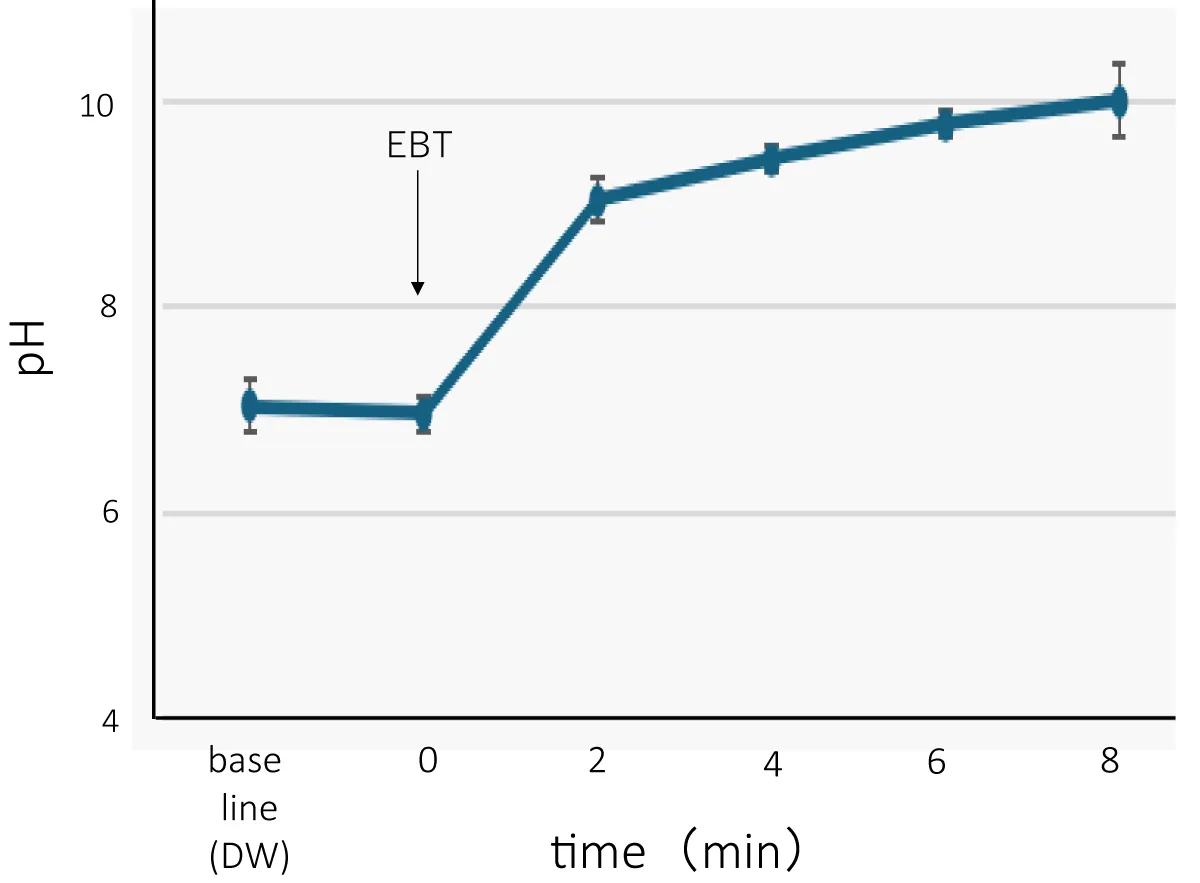
Figure 1: Change in DW pH after dissolution of EBT. Change in DW pH after the addition of one EBT tablet. Baseline means DW only. After the addition of the EBT tablet, the time count started.
Effect of EBT on the pH of black vinegar solution
Next, we measured the pH of the 10% black vinegar solution, which was 3.4 (Figure 2). After the addition of one EBT tablet, the pH of the solution increased, reaching 7.0 after 18 minutes.
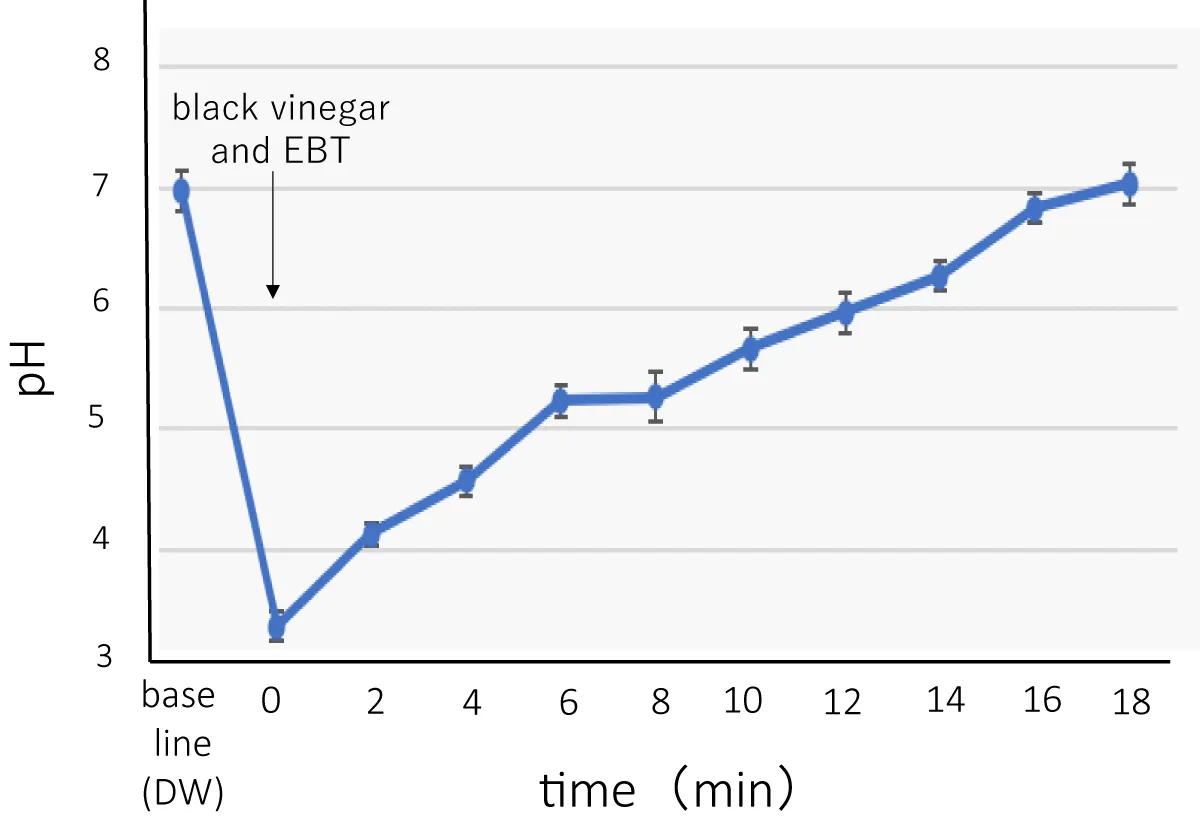
Figure 2: Effect of EBT on the pH of black vinegar solution. Change in the pH of a 10% black vinegar solution after the addition of one EBT tablet. EBT tablet. Baseline means DW only. The pH was measured following tablet addition.
Salivary pH of each participant
We conducted a clinical experiment to examine the effect of EBT on saliva acidified by black vinegar solution (Table 1). One participant was unable to attend the second experiment, because she had developed a cold. The left side of the table shows the results for EBT administration (n = 20), while the right side shows those for gum chewing (n = 19). Baseline salivary pH ranged from 4.4 to 8.7, while pH after consumption of the black vinegar solution ranged from 1.9 to 8.5. Salivary pH varied considerably among participants, making it difficult to analyze all the data together. Therefore, we focused on participants whose salivary pH was below 6.0 after consuming the black vinegar solution (yellow column).
| Table 1: The data are sorted by the order of low pH just after intake of black vinegar. The pH data less than 6.0 are highlighted by yellow (low pH group), and pH data of base line, 1 minute and 2 minutes of low pH group are highlighted by bule, and these are proceeded to the next analysis. | ||||||||||||||
| black vinegar + EBT | black vinegar + control gum | |||||||||||||
| base line | 0 min | 1 min | 2 min | 4 min | 8 min | 12 min | base line | 0 min | 1 min | 2 min | 4 min | 8 min | 12 min | |
| 8.7 | 1.9 | 8.3 | 5.5 | 7.5 | 1.7 | 7.4 | 6.0 | 2.6 | 4.5 | 6.2 | 6.2 | 6.2 | 6.2 | |
| 6.1 | 2.6 | 7.3 | 7.9 | 7.7 | 7.8 | 7.5 | 7.2 | 3.6 | 5.5 | 6.4 | 6.6 | 6.7 | 7.5 | |
| 6.7 | 3.6 | 4.9 | 7.6 | 8.7 | 7.5 | 6.7 | 6.5 | 3.7 | 7.4 | 8.4 | 8.0 | 7.9 | 7.6 | |
| 6.3 | 3.8 | 6.3 | 7.5 | 6.3 | 6.4 | 7.1 | 6.7 | 3.9 | 6.9 | 8.3 | 7.8 | 7.8 | 7.8 | |
| 7.0 | 3.9 | 7.9 | 7.3 | 7.7 | 7.7 | 7.5 | 7.8 | 4.1 | 6.1 | 7.6 | 7.0 | 7.4 | 6.0 | |
| 7.2 | 4.5 | 7.5 | 7.5 | 8.3 | 7.2 | 7.2 | 6.6 | 4.9 | 5.9 | 6.3 | 8.0 | 6.0 | 6.0 | |
| 7.4 | 4.7 | 8.9 | 8.1 | 8.9 | 9.0 | 8.8 | 8.5 | 5.1 | 6.2 | 8.6 | 7.5 | 8.5 | 8.7 | |
| 6.8 | 4.9 | 8.3 | 8.5 | 7.8 | 7.9 | 7.8 | 5.6 | 5.2 | 6.1 | 7.5 | 7.0 | 6.6 | 7.0 | |
| 7.9 | 4.9 | 7.1 | 8.5 | 9.2 | 9.3 | 9.3 | 7.2 | 5.3 | 6.6 | 7.8 | 7.8 | 7.2 | 7.5 | |
| 7.7 | 5.8 | 7.3 | 8.4 | 8.7 | 8.8 | 8.1 | 7.6 | 6.3 | 7.7 | 7.1 | 7.2 | 7.1 | 7.2 | |
| 7.3 | 6.0 | 8.4 | 8.5 | 8.5 | 8.8 | 8.5 | 4.4 | 6.5 | 1.6 | 4.2 | 6.4 | 3.2 | 4.5 | |
| 7.4 | 6.1 | 9.3 | 9.4 | 9.3 | 9.2 | 8.3 | 6.7 | 6.5 | 7.9 | 7.2 | 7.2 | 6.8 | 6.7 | |
| 8.6 | 6.3 | 9.4 | 9.2 | 9.0 | 9.1 | 8.4 | 6.1 | 6.7 | 6.7 | 6.7 | 6.5 | 6.4 | 6.4 | |
| 7.1 | 6.7 | 7.8 | 7.9 | 8.3 | 8.3 | 7.8 | 7.7 | 6.9 | 7.2 | 7.6 | 8.2 | 8.2 | 7.1 | |
| 7.4 | 7.2 | 8.8 | 8.5 | 8.6 | 8.6 | 8.5 | 7.2 | 7.6 | 8.3 | 7.8 | 7.6 | 8.0 | 7.8 | |
| 7.3 | 7.5 | 8.0 | 8.4 | 8.1 | 8.2 | 7.5 | 6.0 | 7.6 | 7.5 | 7.2 | 6.8 | 6.5 | 6.1 | |
| 6.3 | 7.7 | 8.1 | 7.9 | 7.9 | 7.1 | 7.1 | 7.1 | 8.0 | 8.2 | 7.3 | 7.5 | 7.3 | 8.5 | |
| 6.8 | 7.8 | 8.6 | 8.6 | 8.8 | 8.7 | 8.5 | 7.5 | 7.1 | 7.3 | 6.0 | 8.6 | 8.1 | 8.1 | |
| 7.7 | 8.5 | 7.5 | 7.4 | 7.4 | 7.3 | 7.5 | 6.4 | 6.1 | 7.3 | 7.9 | 6.9 | 6.9 | 7.3 | |
| 8.5 | 6.5 | 6.5 | 7.4 | 7.5 | 7.0 | 7.0 | one participant did not attend in the second experiment | |||||||
Changes in acidified salivary pH after EBT administration
Individual changes in salivary pH are summarized in Figure 3. Both EBT administration and control gum chewing increased the pH of acidified saliva, although the patterns of change differed slightly. With EBT, salivary pH increased rapidly after 1 minute and then declined to the neutral range at 2 minutes. With control gum chewing, salivary pH gradually increased to the neutral range at 2 minutes.
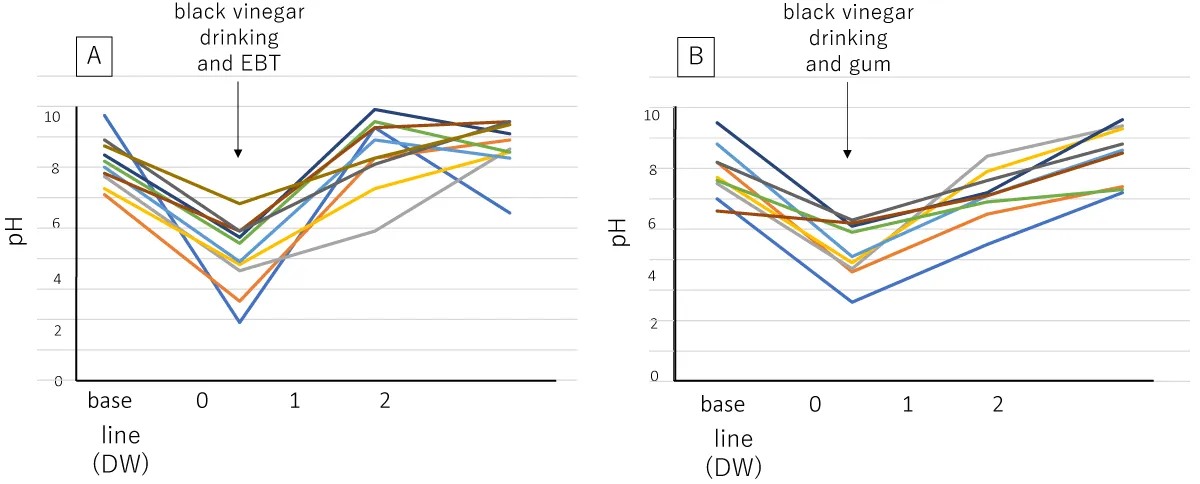
Figure 3: Changes in acidified salivary pH after EBT administration. Individual changes in salivary pH are shown. (A) Changes in pH after licking EBT. (B) Changes in pH after chewing control gum. Baseline means DW only. After addition of the EBT tablet, time count started. Just after drinking black vinegar, participants started licking the EBT tablet or chewing the gum. From this point, the time count started.
Comparison of salivary pH after 1 minute
EBT administration significantly increased the pH of acidified saliva after 1 minute, whereas control gum chewing did not (Figure 4).
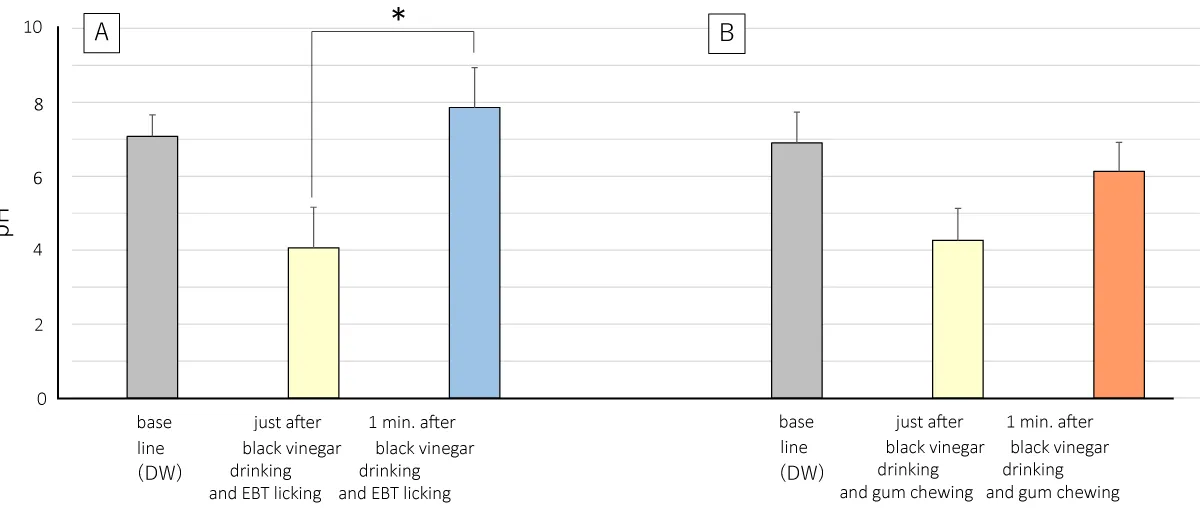
Figure 4: Comparison of salivary pH after 1 minute. Data are presented as the mean and standard deviation of each group. (A) Changes in salivary pH in the EBT group. (B) Changes in salivary pH in the control gum group. An asterisk indicates a significant difference (p < 0.05).
Application of EBT in a patient with tooth erosion
Figure 5A shows intraoral photographs of a patient with tooth erosion at the initial visit. Extensive erosion was observed on the surfaces of the maxillary incisors. The occlusal surfaces of the molars also showed severe erosion. Some fillings were missing, and dental caries was observed. We temporarily restored the affected surfaces with composite resin. We did not ask the patient to change their black vinegar consumption habits but instructed them to lick one EBT tablet after drinking black vinegar. Figure 5B shows intraoral photographs of the patient after 1 month. The temporary restorations remained intact, and no new erosion or dental caries was observed.
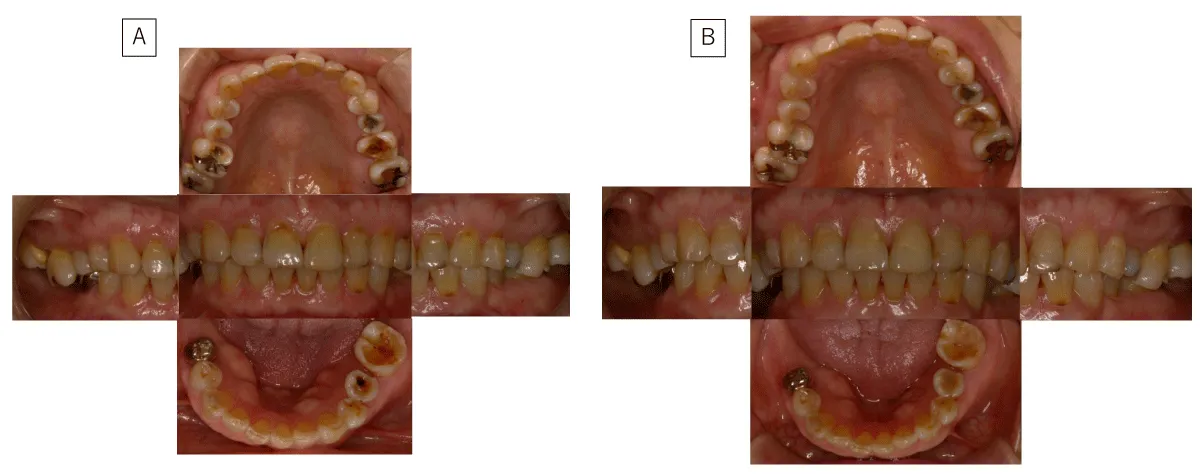
Figure 5: Clinical findings of a patient with tooth erosion. A: Oral condition at the first visit. Tooth erosion was observed on the surfaces of the maxillary incisors. The occlusal surfaces of the molars also showed severe erosion. Some fillings were missing, and dental caries was observed. B: Intraoral photographs of the patient after 1 month. The temporary restorations remained intact, and no new erosion or dental caries was observed.
Enamel is the hardest tissue in the human body, but it is vulnerable to chemical damage, such as that caused by acidic or carbonated beverages [21]. Health-conscious behaviors may also lead to the consumption of foods and beverages associated with tooth erosion. More people are participating in sports these days, often consuming sports drinks. In Japan, people also drink black vinegar to improve their health [16]. Black vinegar is a traditional fermented product that is widely consumed in Japan [17]. Such fermented foods have attracted worldwide attention for their potential to promote longevity [18]. Acetic acid, the main component of vinegar, has been reported to have anti-obesity effects and improve glucose metabolism [19,20]. Thus, black vinegar may offer several health benefits, making it difficult to advise patients to stop or reduce their consumption.
Therefore, we considered using EBT as a salivary buffering agent to prevent tooth erosion. EBT is commercially available in Japan and is used to freshen breath after meals. Some people lick EBT tablets to relieve discomfort associated with gastroesophageal reflux because they contain calcium carbonate and are expected to have a salivary buffering effect. EBT may also reduce anxiety about bad breath associated with saliva acidified by gastric juice.
To date, no studies have reported basic or clinical data on EBT. In our experiment, EBT gradually increased DW pH, as expected. It also increased the pH of the black vinegar solution. We then proceeded to the in vivo experiments, in which EBT increased the pH of saliva acidified by black vinegar solution. Baseline salivary pH and changes in pH after black vinegar consumption varied among participants, suggesting considerable differences in salivary buffering capacity [22]. The variance of the in vitro experiments was very small, and the pH measurement itself is reliable. The variance of in vivo experiments is considered to be due to variance among participants. Therefore, we focused on 12 participants whose salivary pH decreased to below 6.0 after consuming black vinegar. This is a preliminary experiment to examine the effect of EBT on buffering capacity, so we chose participants who have low saliva buffering capacity. EBT administration increased the pH of saliva acidified by black vinegar more rapidly than control gum chewing. These findings indicate that EBT is effective in neutralizing saliva after black vinegar consumption. Interestingly, neutralization occurred more rapidly in the oral cavity than in the in vitro experiment. This may be because the buffering effects of saliva and EBT work together in the oral cavity.
We encountered a patient with severe tooth erosion. The patient had no systemic diseases, including gastroesophageal reflux. She consumed black vinegar after each meal, which was considered a major cause of the erosion. Although the eroded teeth required restoration, the oral condition needed to be controlled beforehand [23,24]. Therefore, we administered EBT after placing temporary composite resin restorations. If the oral condition is not adequately controlled, resin restorations may become dislodged prematurely. With EBT use, the patient’s oral condition remained stable for 1 month, even though the patient continued consuming black vinegar. This suggests that EBT could maintain salivary pH within the neutral range even after black vinegar consumption. If this favorable oral condition persists, we will proceed with permanent restorations.
This study has several limitations and unresolved questions. Because this was a preliminary experiment, the number of volunteers may have been insufficient. In fact, because of variations in salivary buffering capacity among participants, we could use data from only 12 of 20 participants. We need to calculate the minimum required sample size for a properly designed experiment and recruit more volunteers. We also need to expand the participants’ variation, such as age and sex. In addition, the control group chewed gum rather than licking a tablet. A placebo tablet will be needed to ensure comparable experimental conditions. We used a 10% black vinegar solution in this preliminary experiment to reduce participant discomfort. However, some people consume black vinegar without dilution. Therefore, we also need to examine other concentrations of black vinegar solution in future studies. Eating cheese is considered to be a good strategy to prevent tooth erosion. But it is difficult to eat cheese after every meal, so EBT may be a more convenient method.
EBT was originally developed for individuals seeking to freshen their breath and relieve discomfort associated with gastroesophageal reflux, as reflected in the name “Excellent Breath.” If its effectiveness can be confirmed in a larger study population, EBT may also be useful for preventing tooth erosion caused by other foods and beverages, in addition to treating halitosis.
The calcium carbonate-containing tablet (EBT) has a buffering effect on saliva acidified by black vinegar. EBT administration could prevent the progression of tooth erosion in a patient who regularly consumes black vinegar.
This study was supported in part by a Grant-in-Aid for Scientific Research (C) (No. 23K09496) from the Ministry of Education, Culture, Sports, Science and Technology (MEXT), Japan.
The authors thank Dr. Shun-ichi Honda of Honda Dental Clinic for his valuable advice. The authors also thank Angela Morben, DVM, ELS, from Edanz (https://jp.edanz.com/ac), for editing a draft of this manuscript.
Conflict of interest: The authors declare that there is no conflict of interest.
- Frencken JE, Sharma P, Stenhouse L, Green D, Laverty D, et al. Global epidemiology of dental caries and severe periodontitis: a comprehensive review. J Clin Periodontol. 2017;44 Suppl 18:S94-S105. Available from: https://doi.org/10.1111/jcpe.12677
- Miyazaki H, Sakao S, Katoh Y, Takehara T. Oral malodor in the general population of Japan. In: Rosenberg M, editor. Bad Breath: Research Perspectives. Tel Aviv: Ramot Publishing, Tel Aviv University; 1995. p. 119-136.
- Suzuki N, Yoneda M, Takeshita T, Hirofuji T, Hanioka T. Induction and inhibition of oral malodor. Mol Oral Microbiol. 2019;34:85-96. Available from: https://doi.org/10.1111/omi.12259
- Ishii A, Yoneda M, Matsuo T, Omagari S, Suzuki N, et al. Inhibition of protease activity of periodontopathogens by purified lactoferrin and lactoferrin supplement. J Oral Hyg Health. 2019;7:1.
- Shao Y, Wang Y, Yuan Y, Xie Y. A systematic review on antibiotic misuse in livestock and aquaculture and regulation implications in China. Sci Total Environ. 2021;798:149205. Available from: https://doi.org/10.1016/j.scitotenv.2021.149205
- Suzuki N, Yoneda M, Tanabe K, Fujimoto A, Iha K, et al. Lactobacillus salivarius WB21-containing tablets for the treatment of oral malodor: a double-blind, randomized, placebo-controlled crossover trial. Oral Surg Oral Med Oral Pathol Oral Radiol. 2014;117:462-470. Available from: https://doi.org/10.1016/j.oooo.2013.12.400
- Suzuki N, Higuchi T, Nakajima M, Fujimoto A, Morita H, et al. Inhibitory effect of Enterococcus faecium WB2000 on volatile sulfur compound production by Porphyromonas gingivalis. Int J Dent. 2016;2016:8241681. Available from: https://doi.org/10.1155/2016/8241681
- Higuchi T, Suzuki N, Nakaya S, Omagari S, Yoneda M, et al. Effects of Lactobacillus salivarius WB21 combined with green tea catechins on dental caries, periodontitis, and oral malodor. Arch Oral Biol. 2019;98:243-247. Available from: https://doi.org/10.1016/j.archoralbio.2018.11.027
- Suzuki N, Tanabe K, Takeshita T, Yoneda M, Iwamoto T, et al. Effects of oil drops containing Lactobacillus salivarius WB21 on periodontal health and oral microbiota producing volatile sulfur compounds. J Breath Res. 2012;6:017106. Available from: https://doi.org/10.1088/1752-7155/6/1/017106
- Fausett H, Gayser C Jr, Dash AK. Evaluation of quick disintegrating calcium carbonate tablets. AAPS PharmSciTech. 2000;1:E20. Available from: https://doi.org/10.1208/pt010320
- Cassiani RA, Mota GA, Aprile LR, Dantas RO. Saliva transit in patients with gastroesophageal reflux disease. Dis Esophagus. 2015;28:673-677. Available from: https://doi.org/10.1111/dote.12259
- FDI World Dental Federation. Tooth wear. Int Dent J. 2024;74:163-164. Available from: https://doi.org/10.1016/j.identj.2023.10.007
- Schlueter N, Amaechi BT, Bartlett D, Buzalaf MAR, Carvalho TS, et al. Terminology of erosive tooth wear: consensus report of a workshop organized by the ORCA and the Cariology Research Group of the IADR. Caries Res. 2020;54:1. Available from: https://doi.org/10.1159/000503308
- Inchingolo AM, Malcangi G, Ferrante L, Vecchio GD, Viapiano F, et al. Damage from carbonated soft drinks on enamel: a systematic review. Nutrients. 2023;15:1785. Available from: https://doi.org/10.3390/nu15071785
- Ranjitkar S, Smales RJ, Kaidonis JA. Oral manifestations of gastroesophageal reflux disease. J Gastroenterol Hepatol. 2012;27:21-27. Available from: https://doi.org/10.1111/j.1440-1746.2011.06945.x
- Nagashima M, Saito K. Antioxidant activity of the new black vinegar “IZUMI”. J Nutr Health Aging. 2010;14:845-849. Available from: https://doi.org/10.1007/s12603-010-0138-2
- Murooka Y, Yamashita M. Traditional healthful fermented products of Japan. J Ind Microbiol Biotechnol. 2008;35:791-798. Available from: https://doi.org/10.1007/s10295-008-0362-5
- Kondo T, Kishi M, Fushimi T, Kaga T. Acetic acid upregulates the expression of genes for fatty acid oxidation enzymes in liver to suppress body fat accumulation. J Agric Food Chem. 2009;57:5982-5986. Available from: https://doi.org/10.1021/jf900470c
- Yamashita H. Biological function of acetic acid: improvement in obesity and glucose tolerance by acetic acid in type 2 diabetic rats. Crit Rev Food Sci Nutr. 2016;56 Suppl 1:S171-S175. Available from: https://doi.org/10.1080/10408398.2015.1045966
- Valdes DS, Gill SD, Kellow NJ. Effect of dietary acetic acid supplementation on plasma glucose, lipid profiles, and body mass index in human adults: a systematic review and meta-analysis. J Acad Nutr Diet. 2021;121:895-914. Available from: https://doi.org/10.1016/j.jand.2020.12.002
- Al-Amri I, Albounni R, Binalrimal S. Evaluation of the effect of soft drinks on the surface roughness of dental enamel in natural human teeth. F1000Res. 2021;10:1138. Available from: https://doi.org/10.12688/f1000research.55556.1
- Humphrey SP, Williamson RT. A review of saliva: normal composition, flow, and function. J Prosthet Dent. 2001;85:162-169. Available from: https://doi.org/10.1067/mpr.2001.113778
- Né YGS, Souza-Monteiro D, Frazão DR, Alvarenga MOP, Aragão WAB, et al. Treatment for dental erosion: a systematic review of in vitro studies. PeerJ. 2022;10:e13864. Available from: https://doi.org/10.7717/peerj.13864
- Bartlett DW. The role of erosion in tooth wear: aetiology, prevention and management. Int Dent J. 2005;55:277-284. Available from: https://doi.org/10.1111/j.1875-595x.2005.tb00065.x